

Germany History Trip
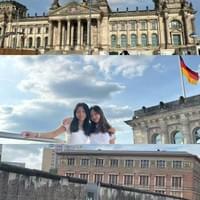
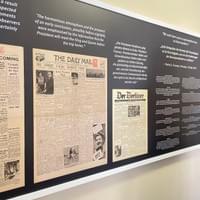
In Berlin, studying the Second World War and the Cold War felt tangible, as history was embedded in the city itself rather than confined to textbooks. I was surprised by how openly Germany engages with its past, and the juxtaposition between modernity and technology with landmarks of the past, as seen by what McDonald’s standing in the place of what used to be Checkpoint Charlie.
Portugal History Trip
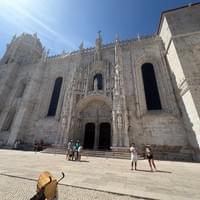
In Lisbon, I explored key sites of Portuguese maritime expansion, including Jerónimos Monastery and Padrão dos Descobrimentos, engaging with the legacy of the Age of Discovery. Prior to the visit, I largely understood European exploration as a process of technological progress and cultural exchange, driven by technological improvements and desire of trade. Through direct engagement with these monuments, I began to recognise how this narrative is constructed: the Jerónimos Monastery, funded by imperial wealth, reflects the institutionalisation of expansion through religion and monarchy, while the Monument to the Discoveries presents a selective, heroic memory of empire. This shifted my perspective, leading me to view early modern exploration not simply as discovery, but as the foundation of global systems of power, in which trade, religion, and ideology were used to legitimise expansion and control

Parliament Politics Trip
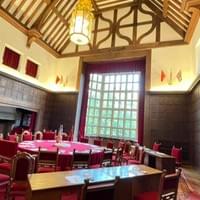
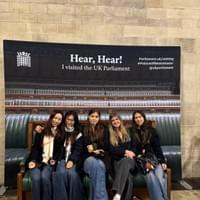
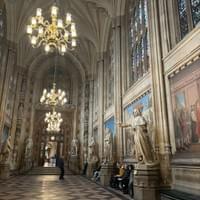
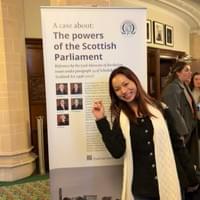
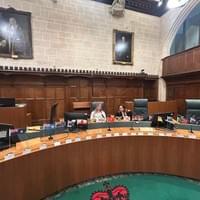
I visited the House of Commons, House of Lords, and the Supreme Court of the United Kingdom, gaining direct insight into the structure of UK governance. Prior to the visit, I had tended to view government, particularly MPs and the Prime Minister, in somewhat idealised terms, as distant and elevated figures removed from the public. Experiencing the House of Commons in person, however, I was struck by its physical smallness and confrontational layout, which reflects the principle of the Prime Minister as primus inter pares — first among equals, rather than a figure set apart from other MPs. Speaking with my local MP, Max Wilkinson, reinforced this shift, highlighting the representative function of MPs and the accessibility of the institution in practice. This reshaped my understanding of political authority, leading me to see how institutional design reinforces the idea that MPs are not elevated above the public, but are elected to represent and be held accountable to it.


Amy's Website